Why you should use gen-AI for your game art… not
Are you ready to be burned at the stake by your players?
You probably don’t need any extra convincing if you’re reading this article.
You probably know that using generative AI tools for your game art is synonymous with hitting yourself in the balls with a sledgehammer.
Or you simply want to understand the long-lasting damage that AI-generated art can have on your game, on your studio, and on the industry.
Here’s the deal: players are confused as heck about what is AI-generated and what isn’t these days.
As a study conducted by the Northern University of Boston points out, this creates a “lemons problem”. Which means that…
When people can’t tell which content is AI-generated and which isn’t, they may start distrusting everything.
“Wait a second. So it doesn’t really matter if you generate your art with AI or not?” On the contrary. This creates two problems:
Being called out for using AI for your art will attract the players’ scorn towards your studio and game.
Creating visuals without understanding what makes them human and original will still get you labeled as AI slop.
The seed of distrust is already planted. Players know that generative AI is being used when creating games. Nearly 10,000 on Steam use it.

So they know to keep their eyes open.
They expect to be cheated.
They expect YOU to cheat them!
And as the study points out, all it takes is for one person to yell from the top of their lungs: “This looks like AI slop!” and you’re done for.
It’s even worse if the players kept your game in high regard before hearing this.
A simple callout is all it takes to negatively shift their opinion of your game and studio.
And we’re not only talking about current players.
We’re also talking about potential players being driven away before they even get to purchase and play your game.
Sure, the first easy fix is to stop using this technology to create these lifeless and emotionless pieces of crap.
And the second solution is to work with actual artists who understand:
how to capture emotion
how to create art that tells a story and connects with people
how to create art that feels unapologetically human
It could be a dedicated artist (or an art department) on your team.
It could be an outsourcing art studio.
The point is that you want someone who understands what visual development is and how to do it right.
The 10,000 bowls of oatmeal problem
In simple terms, you’re perfectly capable of pouring 10,000 bowls of oatmeal in a way that makes them look distinct - at least technically.
But that doesn’t mean that one bowl or the other will be unique or catch someone’s eye.
That’s pretty much what’s going on with AI-generated art.
Sure, it can look “technically” different.
But it lacks perceptual uniqueness.
It feels repetitive and cheap.
It leaves players with a less enjoyable experience.
As another study conducted by the Communication University of China and Lanzhou City University discovered, players are against the use of AI-generated art assets because of:
Low innovation
Cheap-looking aesthetics
Weak authenticity or emotionality
A feeling of superficiality towards the generated assets
A lack of a human perspective that they can empathize with
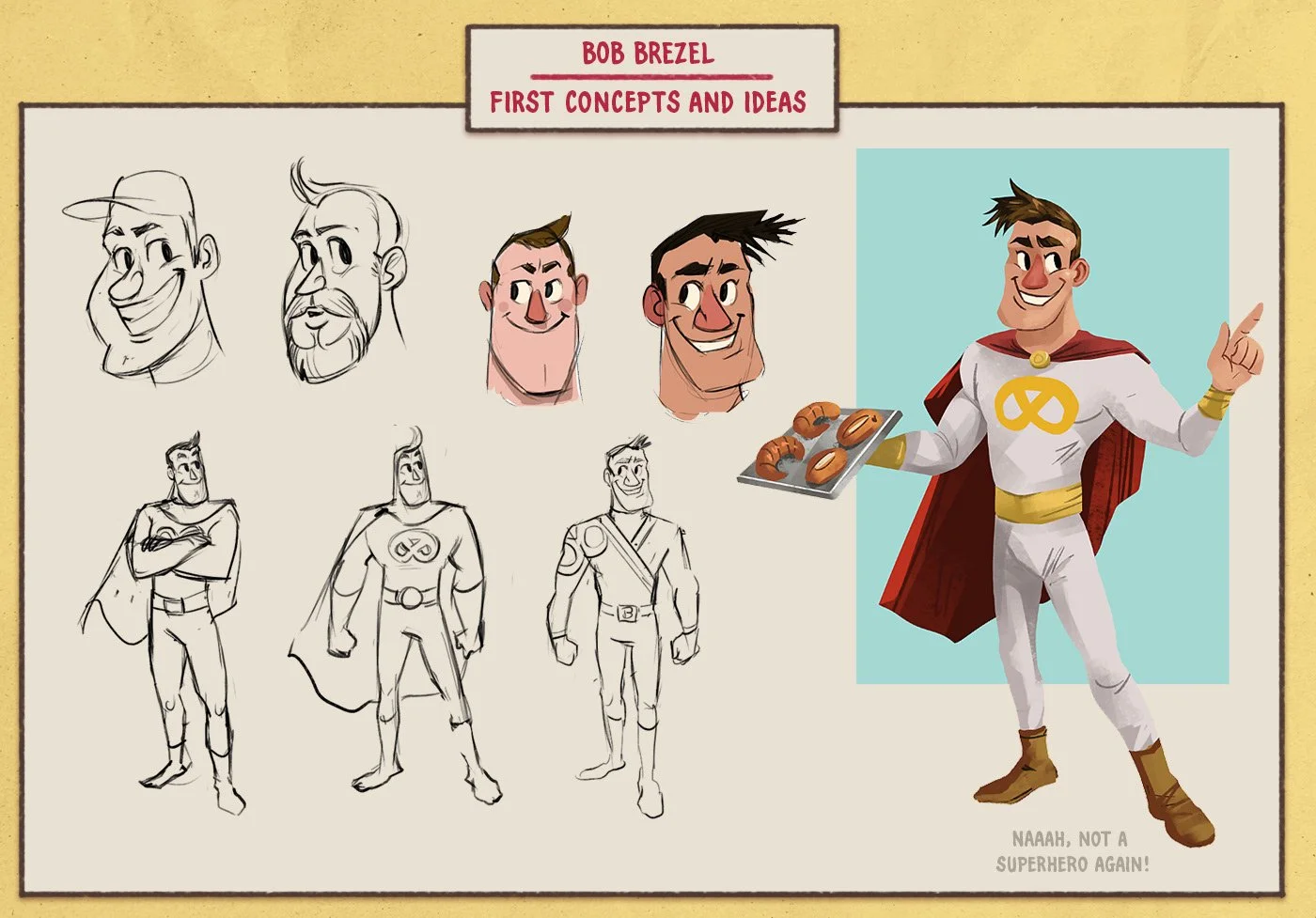
It’s not just about the lower quality of the assets.
It’s also about how players expect art to be emotionally expressive.
To feel human.
To feel the sensitivity of the person behind it.
As a participant in the Northern University of Boston study said:
“There is a different aspect when it is human-made that almost shows more effort and I get more enjoyment out of it.”
Your players look at the bigger picture
You might not be concerned with “small” issues like art theft, the environmental impact, or how the use of generative AI negatively impacts the gaming industry.
But guess who’s keeping an eye on all that?
You got it. It’s your potential audience.
YOUR players’ concerns go beyond the games themselves
They extend to how you’re using a language learning model trained on actual human art.
And how you’re robbing those artists just to get a subpar version of what their work might look like.
As another participant in the Northern University of Boston study mentioned:
“Generative AI content is regurgitated slop stolen from real artists.”
Gamers think about the loss of real talent
They fear that the warm human touch of an artist will be replaced by a cold and indifferent technology that only pretends to understand art.
And can you blame them?
About 45,000 gaming jobs have been lost between 2022 and July 2025.
And the momentum of these layoffs doesn’t seem to slow down even now.
In a blind pursuit for efficiency, we start losing what makes games and art special: humans.
What’s the point of having a ton of gorgeous games to play on a dead planet?
“What is different about generative AI is the power density it requires.
Fundamentally, it is just computing, but a generative AI training cluster might consume seven or eight times more energy than a typical computing workload.”
But this statement alone is not enough. Let’s give you some numbers.
According to the Organization for Economic Co-operation and Development, data center electricity consumption rose to 460 terawatt-hours in 2022.
That’s almost as much as France that year (463 terawatt-hours).
And this value is expected to reach 1,050 terawatt-hours this year.
If data centers were considered a country, they would be the fifth-largest electricity consumer.
But that’s not all.
These centers also need chilled water to cool down.
According to Bashir, it has been estimated that for each kilowatt-hour of energy a data center consumes, it would need two liters of water for cooling.
If we were to do some simple math and conversions, data centers consume around 2.1 trillion liters of water per hour.
Let that sink in.
Whoops!
You don’t have enough water to let it sink in.
In the end… You own nothing, Jon Snow!
You might close your eyes to the fact that players will blast you into oblivion for the use of gen-AI art.
You might close your eyes when committing art theft, being responsible for job losses, or even for murdering the planet (and yourself) in the process.
But you might not be able to ignore the fact that…
Your AI-generated art assets aren’t yours.
As reported by the European Parliament in December 2025, most countries promote human-centric creations and have a firm stand that AI-generated content can’t be copyrighted.
It’s not recognized as copyrightable in the European space, and the Court of Justice of the European Union requires that copyright-protected works must be original in the sense that they reflect the 'author's own intellectual creation' resulting from free and creative choices.
Major countries like the United States have a similar perspective, with the US Copyright Office reporting in March 2025 that:
“Given current generally available technology, prompts alone do not provide sufficient human control to make users of an AI system the authors of the output”.
Here’s a simpler explanation:
If somebody wants to use your AI-generated art, they’re free to do so.
You can’t claim ownership.
You can’t say it’s yours.
It doesn’t belong to you.
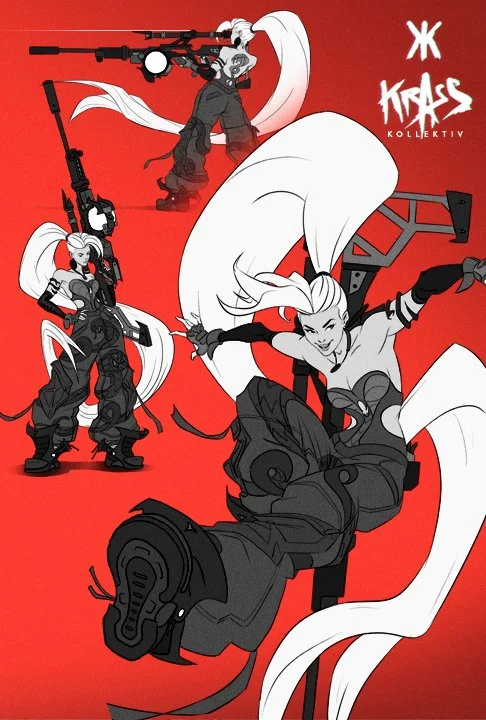
The one thing you truly own is the art created by the artists you work with.
Be it your internal teams.
Or be it art studios like us who can handle it for you.
So what shall it be?
Generating pieces of crap that you don’t even own?
Or working with real artists whose work is both memorable and protected by the law?
Let’s have a chat if you picked the second option.