What the heck is Visual Development? Why does my game studio need it?
Visual Development - a simple explanation
In short, Visual Development is the bridge between those great ideas in your head and what your players will actually see when they play your game. Simple enough, right?
“Why do I need it though?”
Let me tell you a story.
I promise it’s a short one.
Let’s say you’re a Spanish speaker travelling to Germany. You don’t speak German. You enter a restaurant where the staff doesn’t speak English or Spanish. A real conundrum, ain’t it?
You try to decipher the menu on your own. Maybe use a translation app. Maybe try some sign language. Whatever.
You manage to order something. But it ends up being partially or totally different from what you wanted.
You suck it up.
You pay for the meal.
You leave unsatisfied.
Now let’s take the same scenario. But you were inspired enough to ask a local for help.
They show you the best restaurants.
They translate the menus.
They help you order.
You end up enjoying the experience.
Having people who tackle your visual development is no different.
They’re the actual bridge between your ideas and what players will (want) to see. They guide your artists and your future players in the right direction.
But unlike ordering a meal in a foreign country, there’s a catch.
You lose exponentially more if your team messes up the visuals.
Why?

Because you end up wasting time and money on a game that people aren’t interested in looking at.
Because they get so lost and confused when playing that they’ll just put the game down.
Even if they push through it with sheer willpower… there’s always the review section. You know how people like to complain about anything they don’t like, don’t you? That crap spreads like wildfire. It does irreparable damage to your reputation.
I know it sounds like doom and gloom. Because it can be that way.
You need to snap out of your fairy tale and realize that…
You’re competing with tons of games and studios.
These are people who’ve been creating games for decades.
Or newcomers who will fight fiercely for their share.
Maybe you’re one of the newcomers who wants an advantage up your sleeve.
Maybe you’ve been developing games for a while.
But nothing really managed to stick the landing visually.
Why not just get someone to handle it for you?
Visual Development- A few specific details
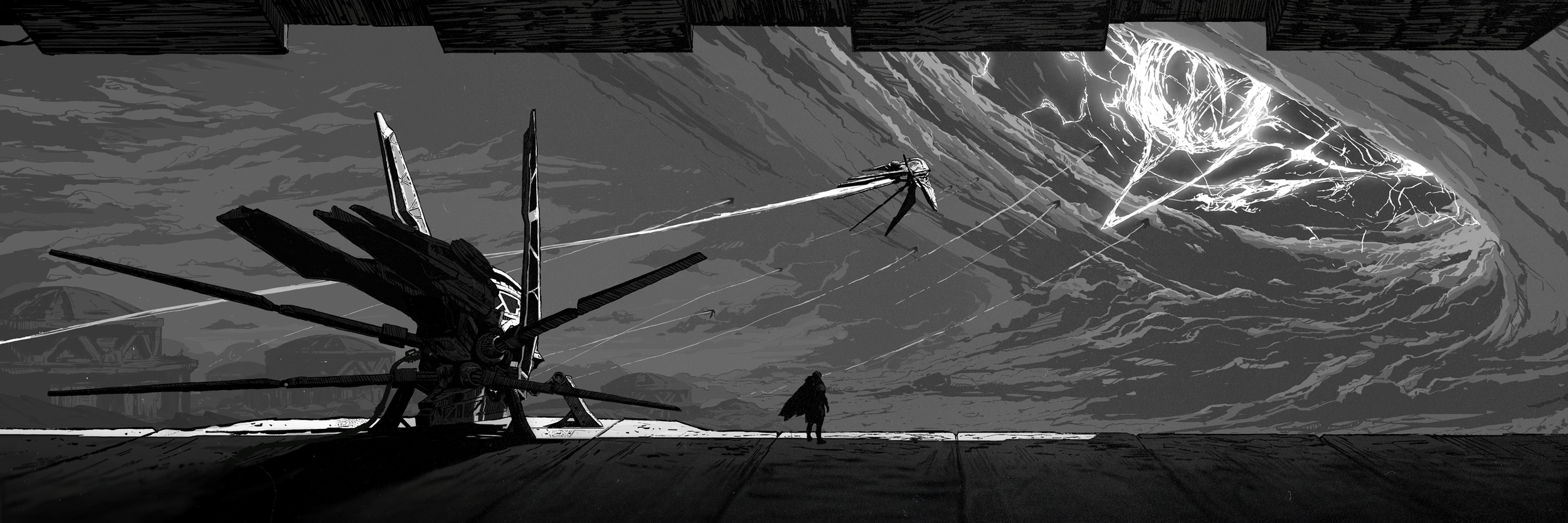
Ok ok. You got through the funny parables and metaphors about visual development.
If you’ve made it this far, it means that you want to know:
“What exactly do I get from it?
Give me the specifics.
Tell me about the deliverables.”
Here’s what you should get from a competent team:
Style Guides
This is your game’s visual identity, summarized in a clear guide.
It helps your team members, external artists, or freelancers know exactly what to follow.
The guide defines:
what is allowed
what is not allowed
which visual rules must be followed
This way, every asset stays aligned with your IP and final product.
Mood Paintings
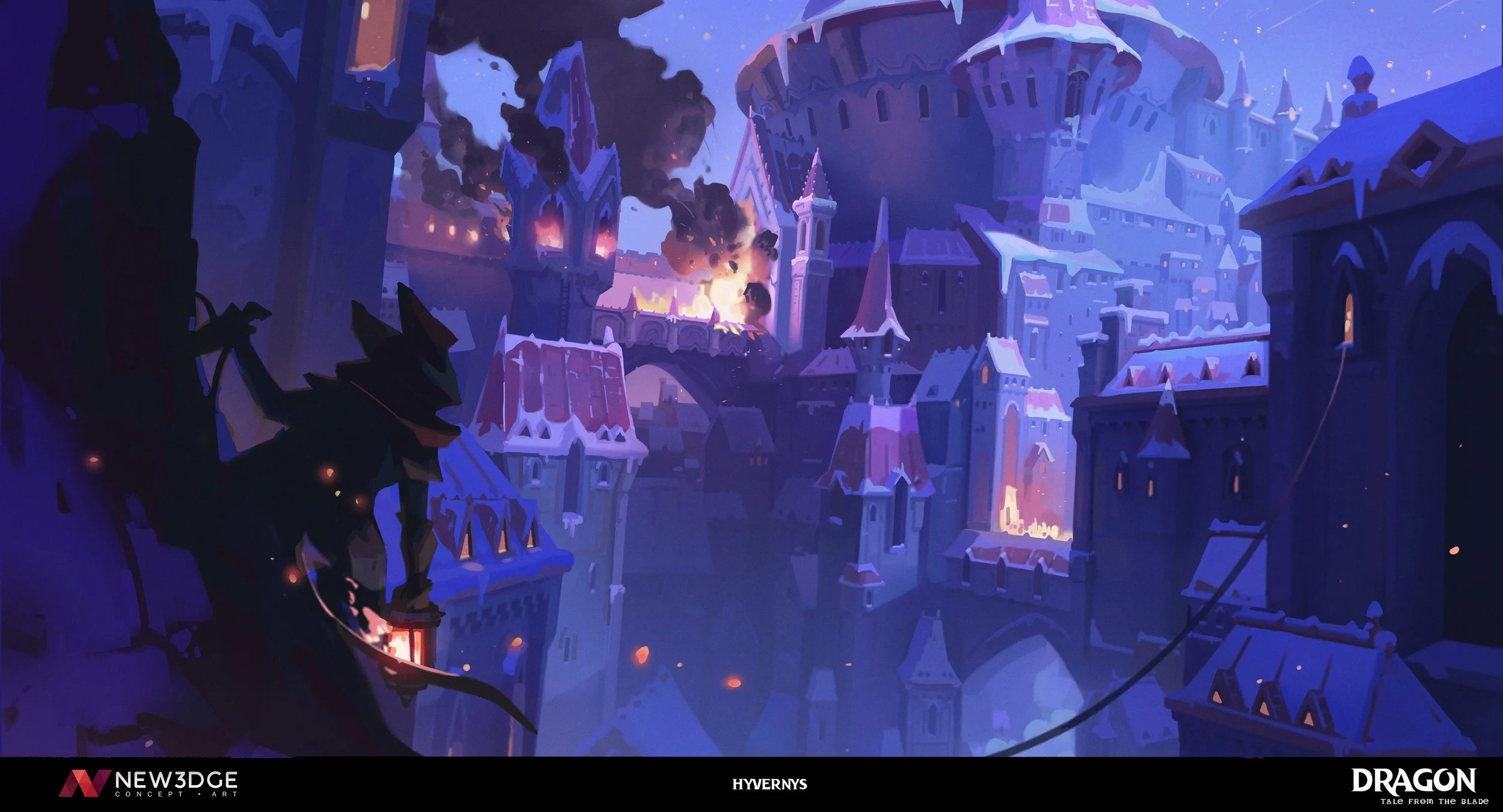
These are scenes or key art explorations that capture the feeling and atmosphere of your game.
Usually, artists like us create several smaller visual examples first.
From those, you can choose the directions that best represent the mood, tone, and emotional identity of your game.
Color Scripts
Every IP has its own color palette.
It helps players recognize your game.
It also carries the emotional identity of your world.
For color scripts, we create different color variations for a scene to explore which palette best supports the intended atmosphere, emotion, and player experience.
Shape Language Explorations
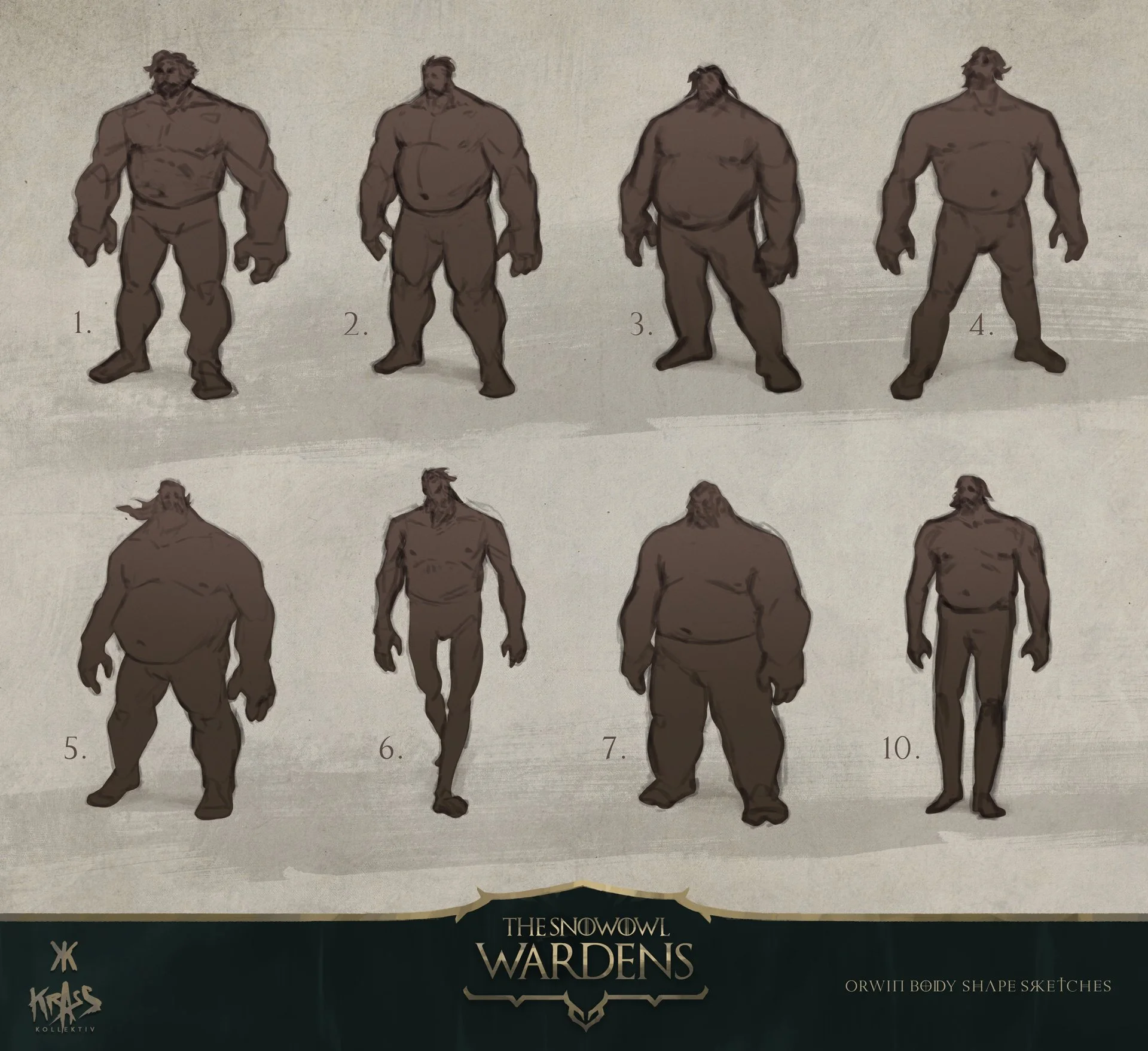
There are sharp, aggressive shapes.
There are round, friendly shapes.
And there is everything in between.
When defining a visual style, shape language is not just decoration - it is a clear statement to everyone looking at your game.
It influences how your world is perceived.
And it helps create the uniqueness every player wants from a game.
Material & Lighting Studies
Shooters, building games, puzzlers - every genre uses materials, light, and effects for different goals.
In a shooter, enemies need to stay clearly visible.
The environment should not distract too much.
Strong reflections in puddles, for example, could work against gameplay readability.
In a building game, a storm should not hide the areas where players need to build.
In a puzzler, candy, gems, or objects may need to look especially appealing, readable, and satisfying.
Material and lighting studies help define how surfaces, light, reflections, weather, and effects should behave so that the visuals support the game rather than working against it.
World-building Sketches
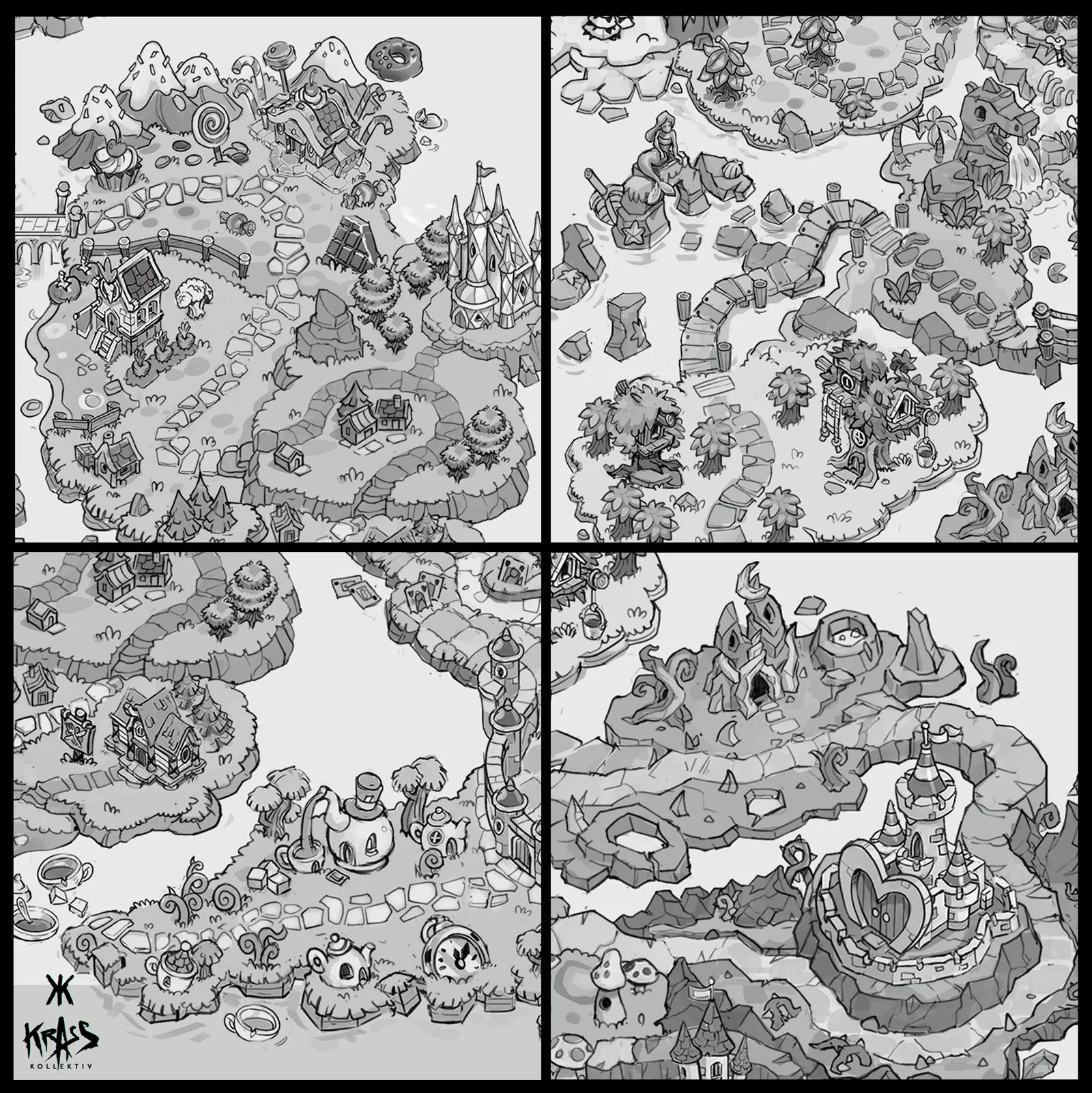
A game needs levels, regions, and biomes that feel different from each other while still belonging to the same world.
Each area may have its own:
climate
architecture
landmarks
props
materials
vegetation
These are details that make it feel unique.
And someone needs to come up with them.
Worldbuilding sketches help explore these ideas early and create a stronger foundation for your game world.
Visual Rules & Art Directions
More than creating resources, capable visual development artists can also support your team with their knowledge.
Or with their own art team, as we do 😉
They will guide the visual direction of your game from the first idea to the final product.
That means:
helping you define the rules
keeping the visuals consistent
making sure the art stays aligned with your IP throughout production
“Freaking hell! Why do I need sooo many things?”
Because you want your visuals to remain consistent as you keep developing the game. Because you want a certain quality standard to be upheld by your art team.
And because you want a game that JUST! FEELS! GOOD! for your players.
You can get an idea of how these should look and feel if you take a look at our Outsourcing Art Services section.
Just click on it from the menu at the top and take a look.
Why don’t more people talk about it if it’s sooo important?🙄
You could say that most folks get blinded by the lights of production.
Visual development happens in the early stages of production.
Speed is the name of the game.
You want to get from idea to concept as early as possible.
You want to understand how things should look.
You want the rules of your art direction to be set in stone asap.
All those deliverables that you should get?
You want them done fast!
The sooner you get them, the sooner your art team can start cooking.
Great visual development should:
Establish a vision that your entire team can follow.
Guide your player through gameplay and story sections.
Tell you what you can and can’t do from a technical standpoint.
Save you money from going yolo with your visuals, just to find out that they need to be reworked.
is visual development more important for INDIE & AA studios?
Your advantage as an indie or AA studio is how quickly you can go from ideation to production.
The bigger the studio, the harder it is to get something done.
Endless approval chains.
Endless revisions.
Just an endless cycle of pains in the butt 😩
But that’s not you.
You’re allowed to think it.
Discuss it.
Approve it.
Make it happen.
All of this in way less time than a behemoth of a studio.
And with way less wasted money.
If you lose your ability to think and act fast, you’re just like those gigantic studios.
Except that they have the resources for that slower process.
You don’t!
Visual development comes in to save you time and money early.
Your ideas become concepts you can quickly see, understand, and validate.
All the materials you receive will make it clear that “This is how our game should look!”
You eliminate any threat that might confuse your artists when production starts.
In the end, you can focus on your quick and efficient development process.
Because your art team has all the guidance they need from the start.
Sounds like what you need for your game and team?
Let’s talk!